Documents
Documents historiques
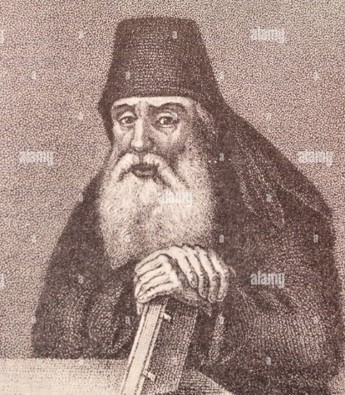
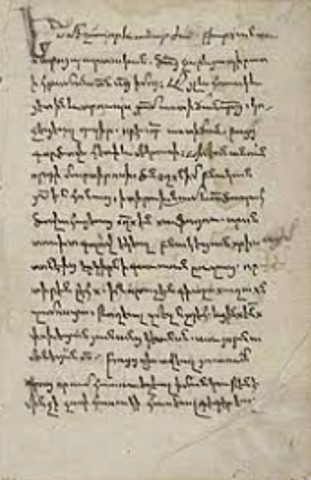
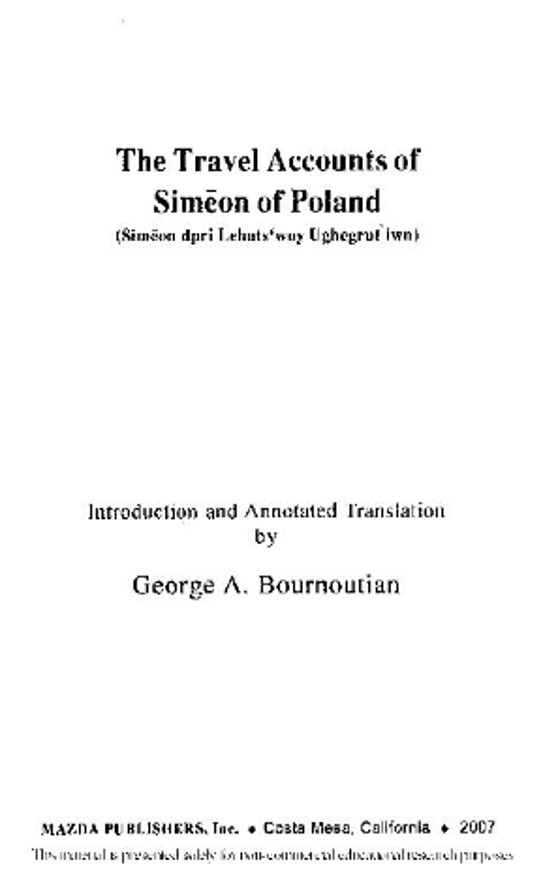
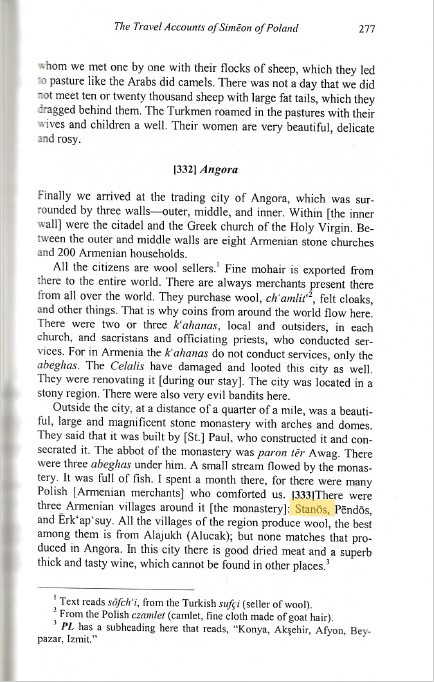
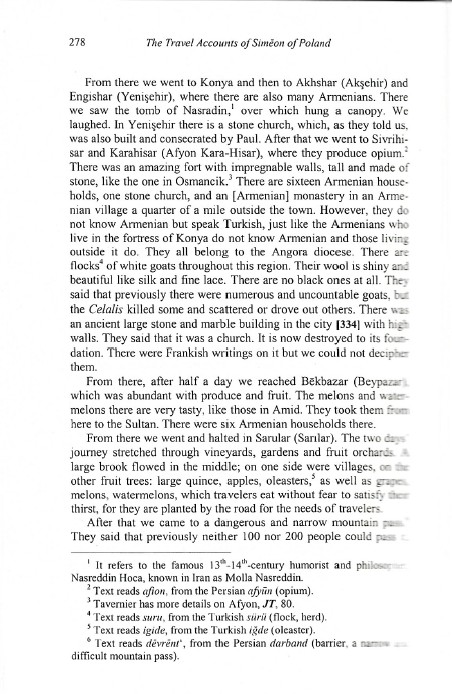
Simeon of Poland - 1612
Evliya Celebi, an ottoman traveller in 1655
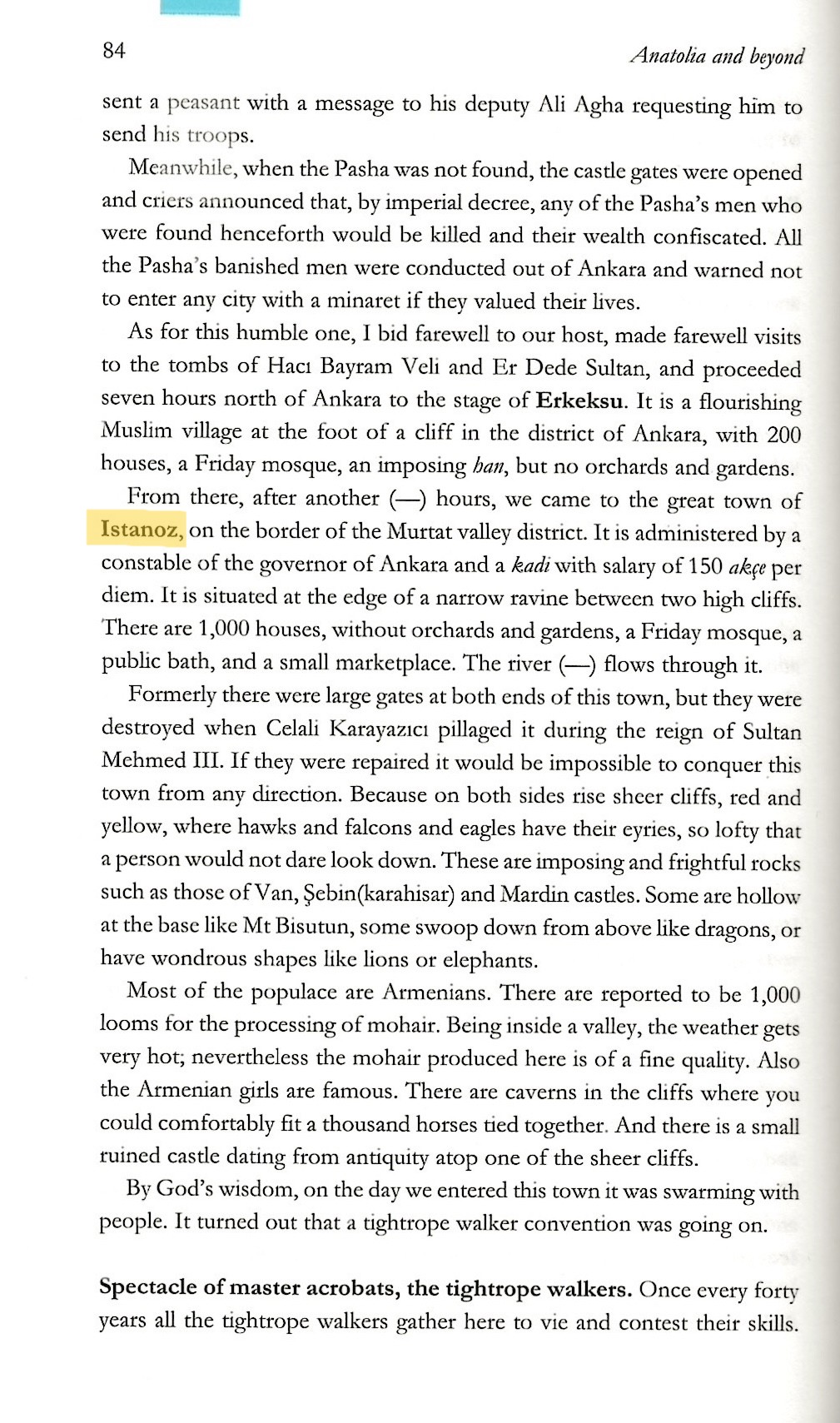
Istanoz, sur le bord du district de la vallée de Mourta, est administré par un gendarme du gouverneur d'Ankara et un kadi avec un salaire de 150 akçe par jour. Elle est située au bord d'un ravin étroit entre deux hautes falaises.Il y a 1 000 maisons, sans vergers ni jardins, une mosquée du vendredi, un bain public et un petit marché. La rivière traverse la ville.Autrefois, il y avait de grandes portes aux deux extrémités de cette ville, mais elles ont été détruites lorsque Celali Karayazici l'a pillée sous le règne du sultan Mehmed III. Si elles étaient réparées, il serait impossible de conquérir cette ville à partir de n’importe quelle direction. Parce que des deux côtés, il y a des falaises abruptes, rouge et jaune, où les faucons et les aigles ont alors des aires, si élevés que personne n’oserait regarder vers le bas.Ce sont des rochers imposants et effrayants comme ceux des châteaux de Van, de Sebin (karahisar) et de Mardin. Certains sont creux à la base comme le mont Bisutun, d'autres descendent en piqué comme des dragons, ou ont des formes merveilleuses comme des lions ou des éléphants.La plupart de la population est arménienne. Il y aurait 1 000 métiers à tisser pour le traitement du mohair. Etant à l'intérieur d'une vallée, le climat peut devenir très chaud ; néanmoins le mohair produit ici est d'une bonne qualité. Aussi les filles arméniennes sont également célèbres. Il y a des cavernes dans les falaises où vous pourriez confortablement accueillir un millier de chevaux ensemble. Et il y a un petit Château en ruine datant de l’antiquité au sommet de l'une des falaises abruptes.
Adolphe Joanne et Emile Isambert - 1861
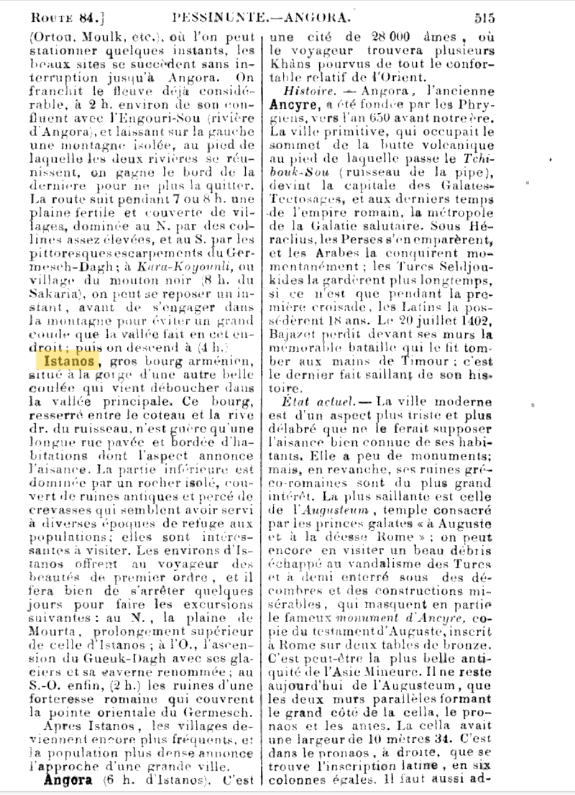
Istanos, gros bourg arménien, situé à la gorge d'une autre belle coulée qui vient déboucher dans la vallée principale. Ce bourg, resserré entre le coteau et la rive dr. du ruisseau, n'est guère qu'une longue rue pavée et bordée d'habitations dont l'aspect annonce l'aisance. La partie inférieure est dominée par un rocher isolé, couvert de ruines antiques et percé de crevasses qui semblent avoir servi à diverses époques de refuge aux populations; elles sont intéressantes à visiter. Les environs d'Istanos offrent au voyageur des beautés de premier ordre, et il fera bien de s'arrêter quelques jours pour faire les excursions suivantes: au N., la plaine deMourta , prolongement supérieur de celle d’Istanos ; à l’O. l’ascension du Gueuk-Dagh avec ses glaciers et sa caverne renommée; au S-O. enfin (2h), les ruines d’une forteresse romaine qui couvrent la pointe orientale du Germesch
Charles Texier - 1862
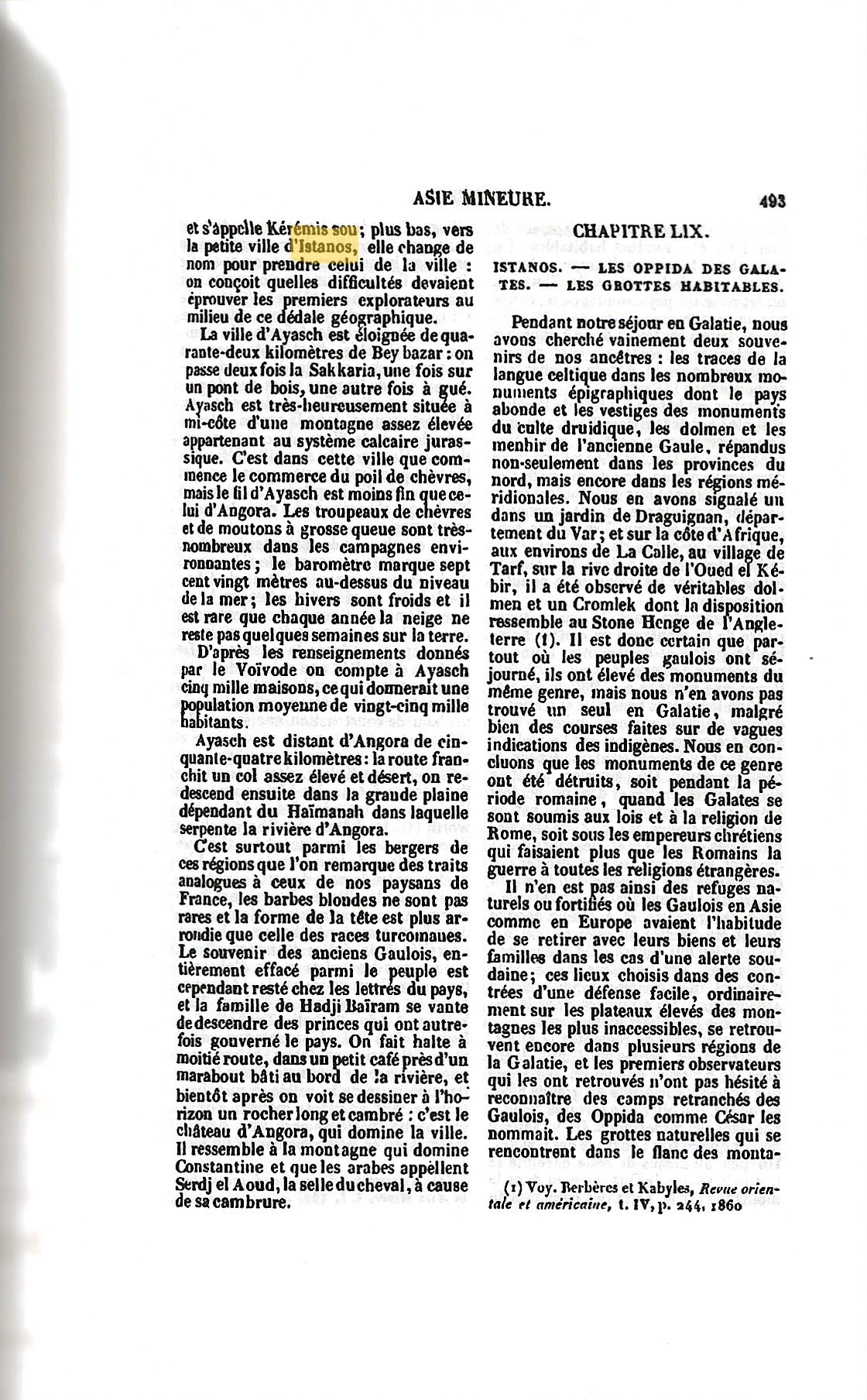
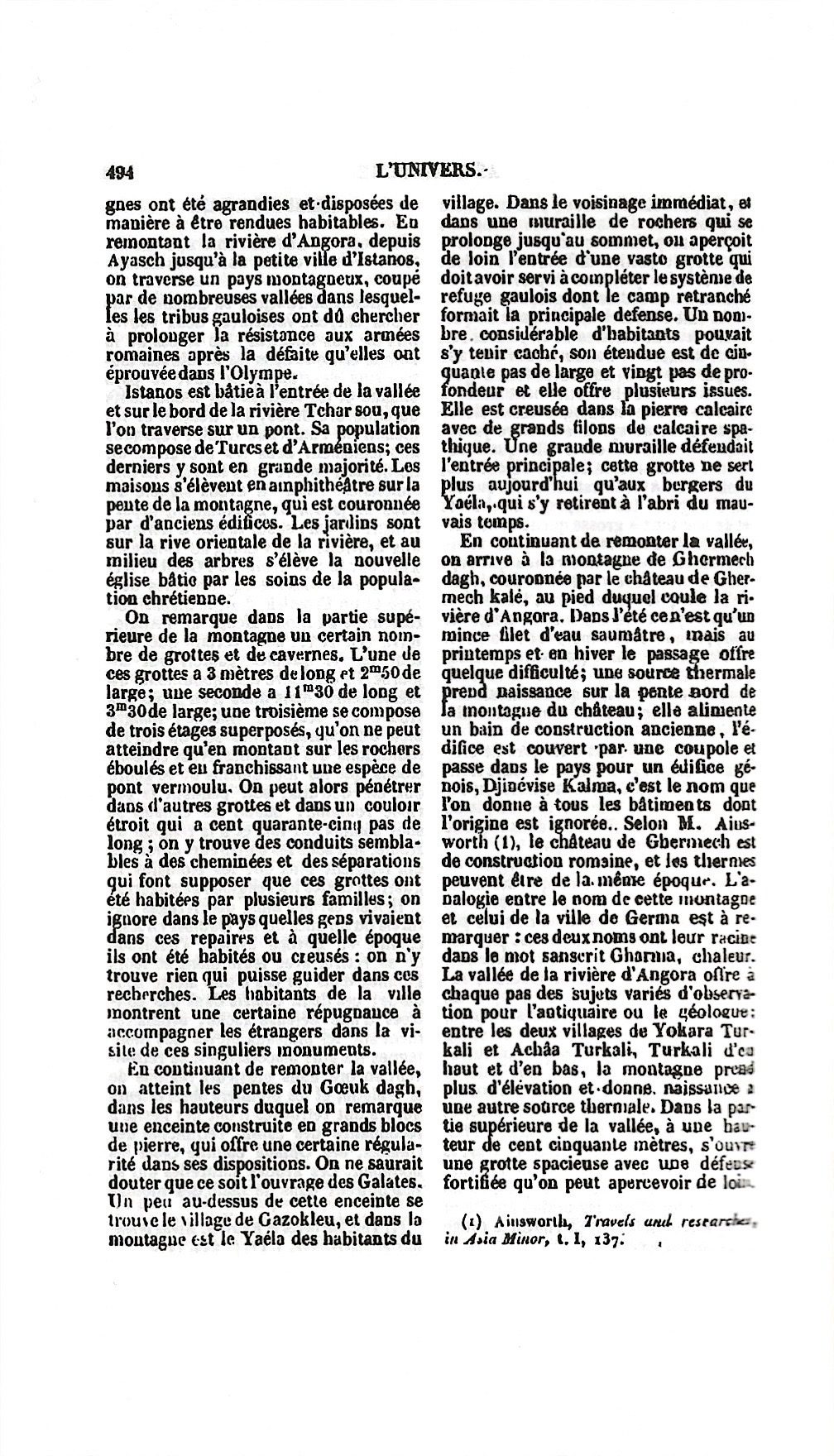
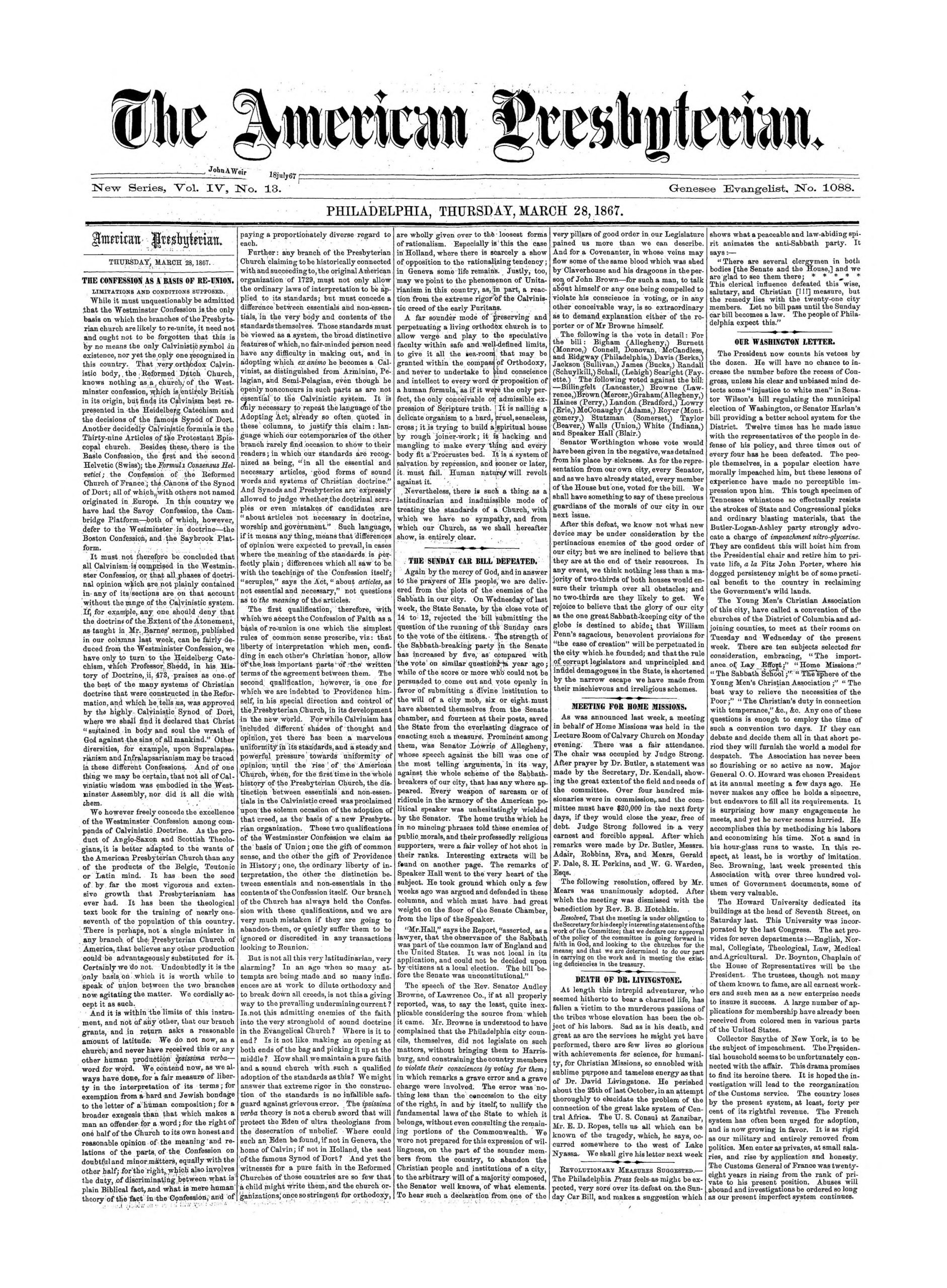
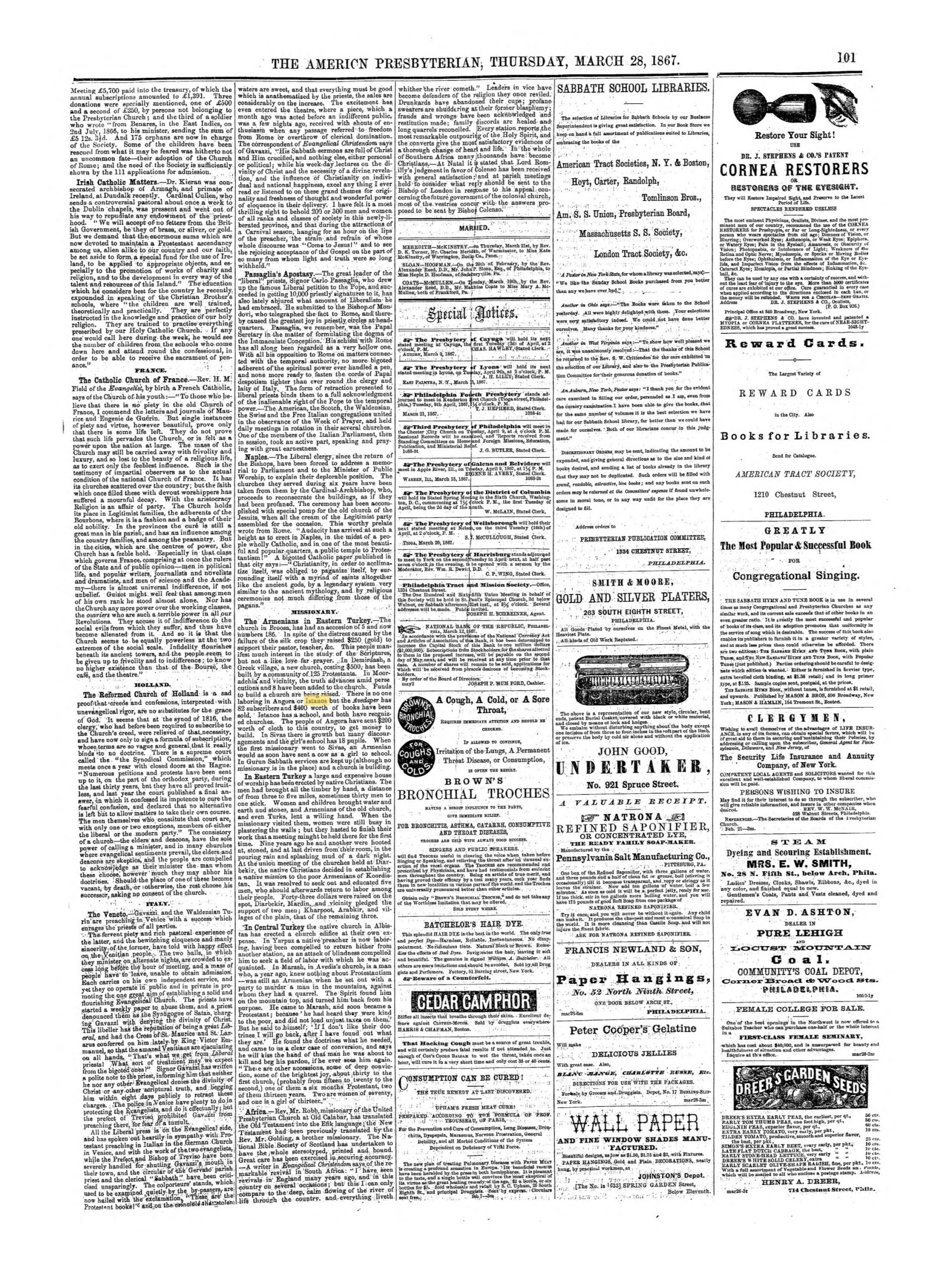
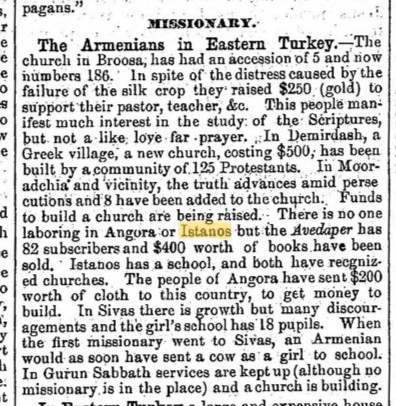
The american presbyterian, thursday March 28, 1867
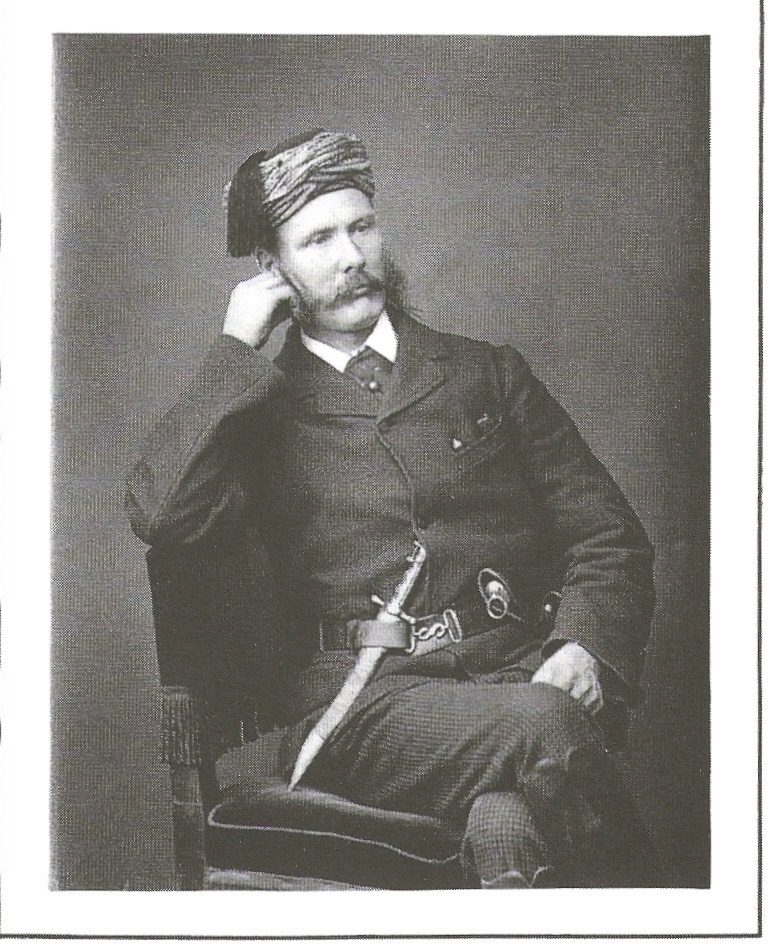
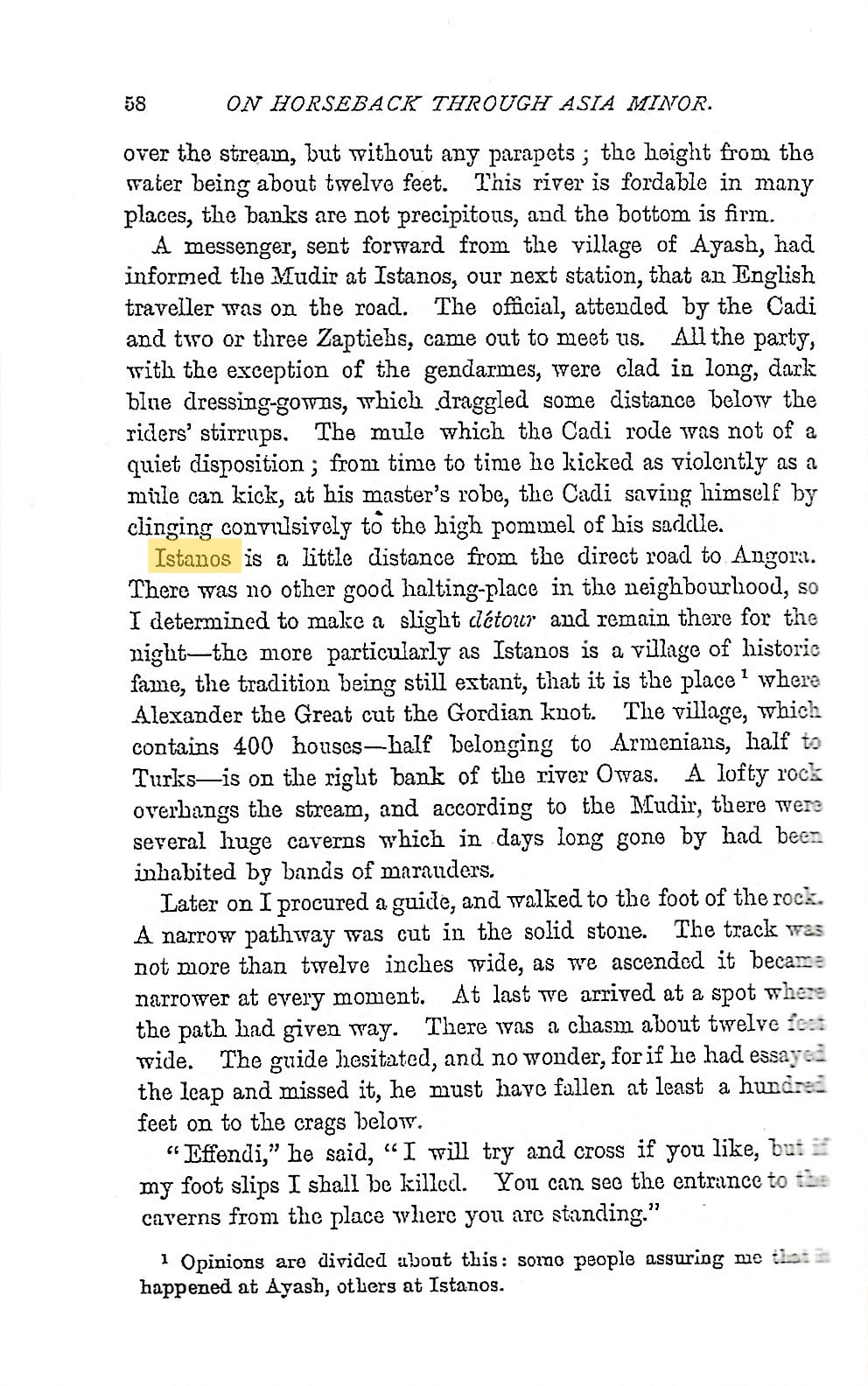
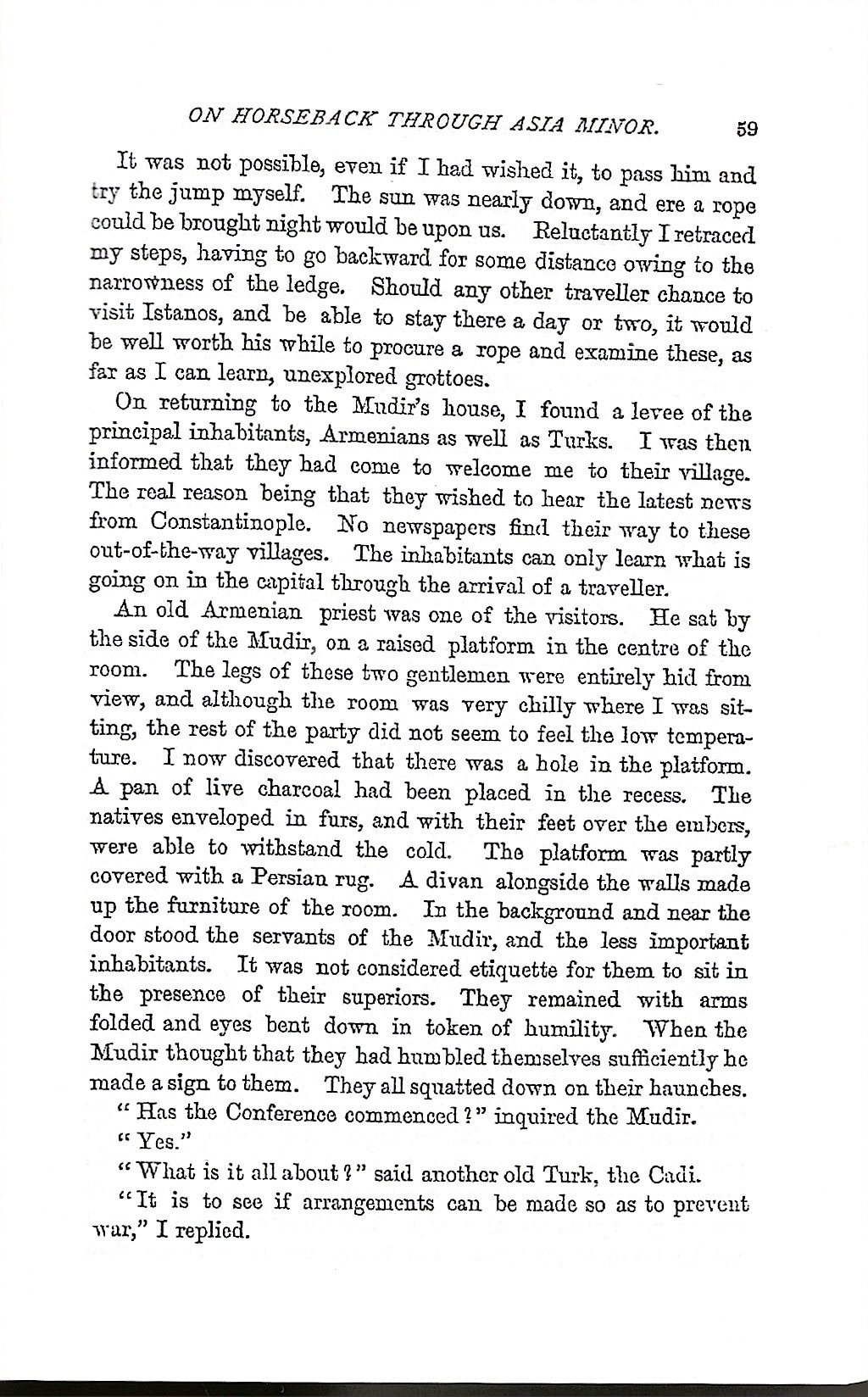
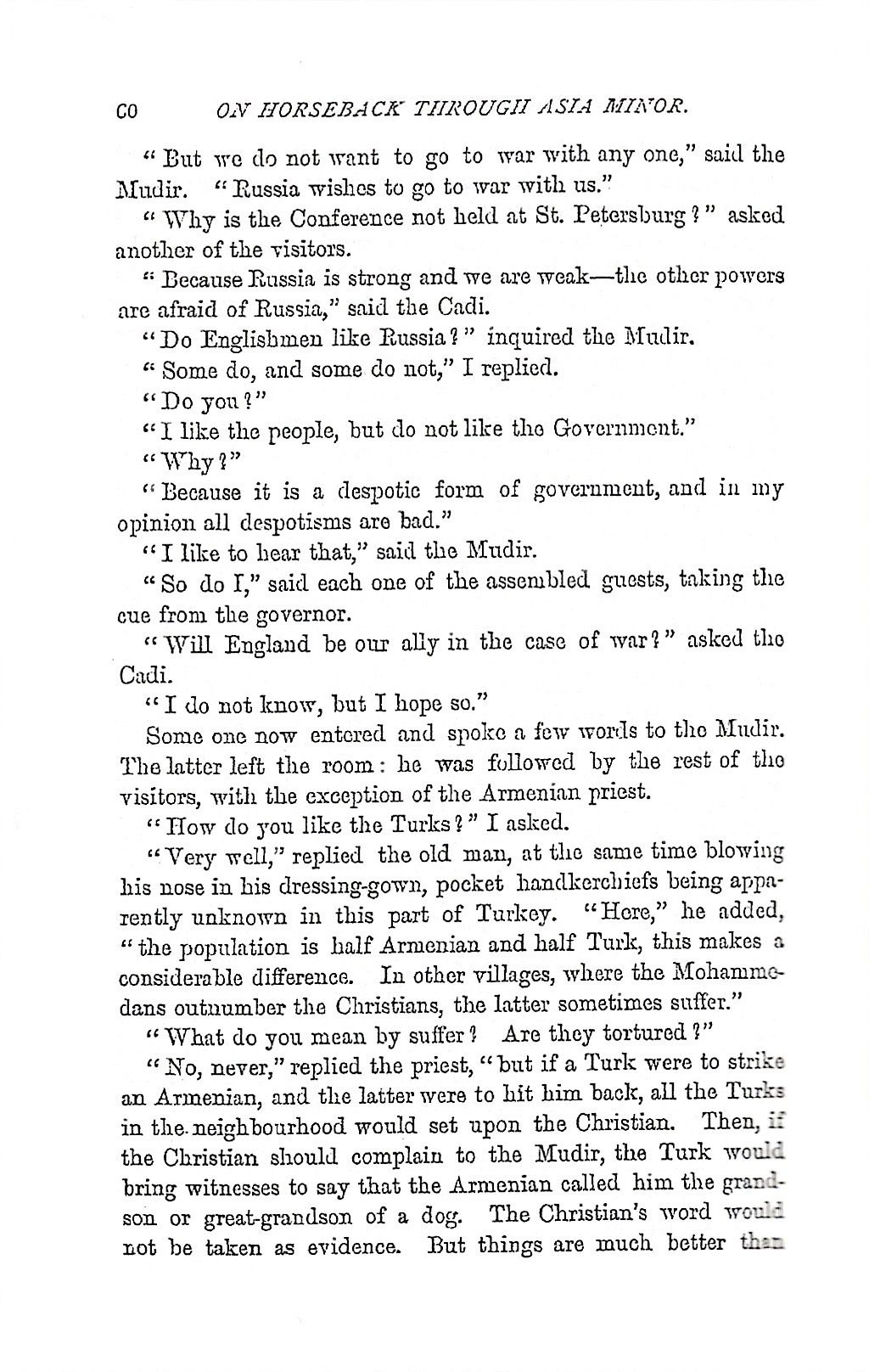
Capitain Fred Burnaby - 1878
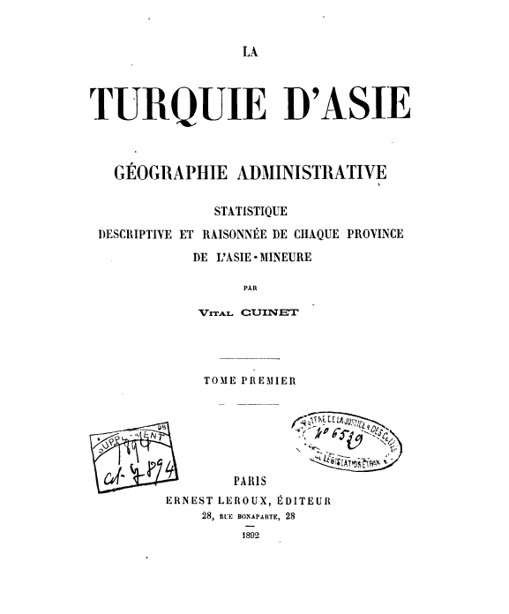
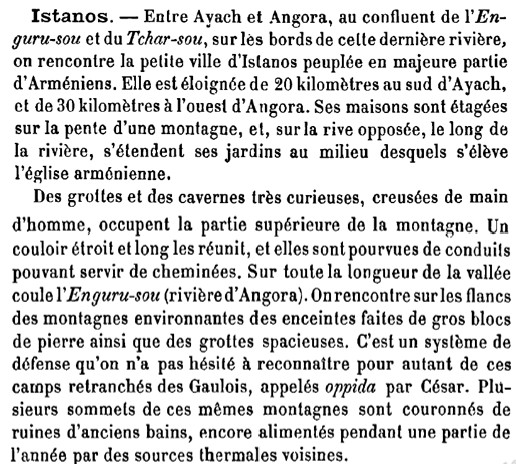
Vital Cuinet - 1892
Journal Aravod 28 avril 1919 - Exile and Massacre : Stanoz and Ayaş 1915
https://pontosworld.com/index.php/pontus/news/434-exile-and-massacre-stanoz-and-ayas-1915
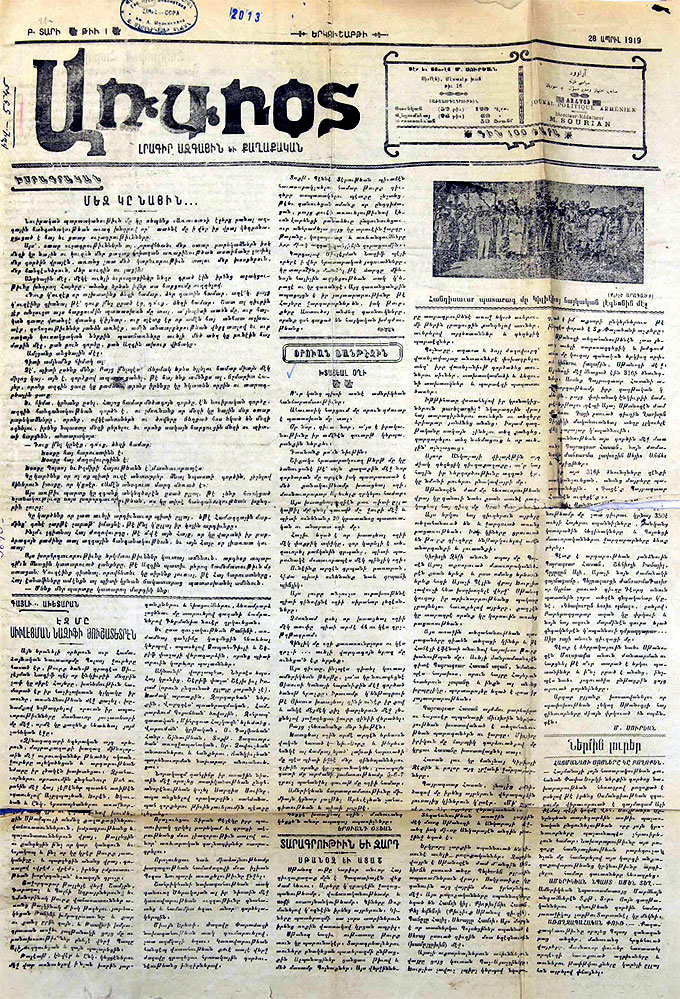
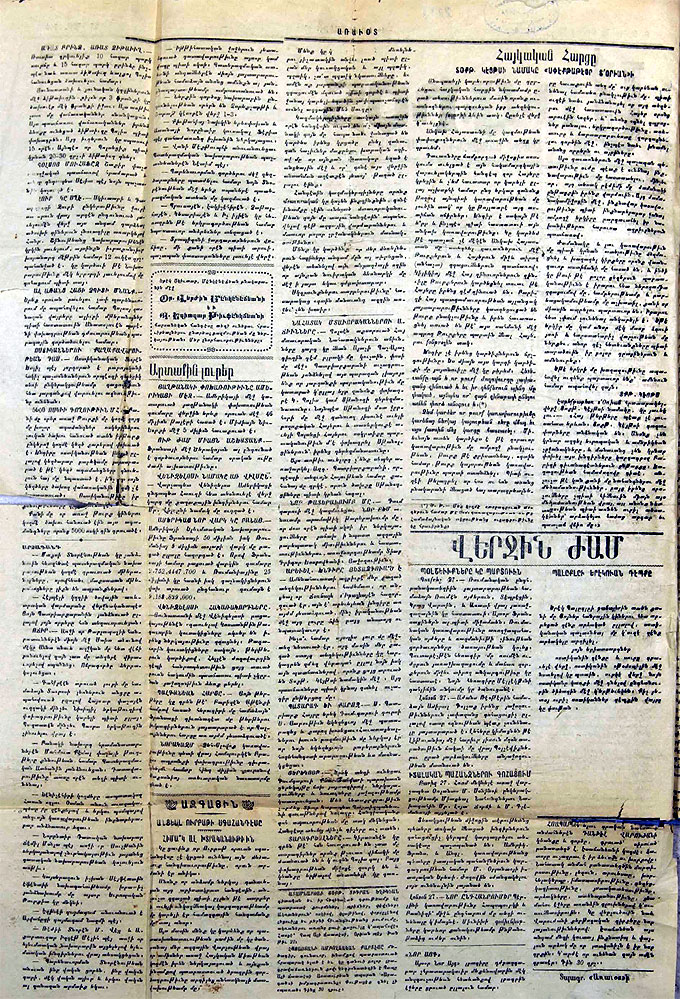
While researching the Ottoman press within the years 1918-19 it is also necessary to evaluate the Armenian press of Istanbul. However the Armenian press of that period has not been cared for sufficiently up to the present and has not been evaluated in detail. The Armenian press broadcasted many publications about the Genocide within the postwar period and gave important information to the public.
These newspapers gave information in relation to the trails of the Unionists and also handled the massacres which were realized within many parts of Asia Minor during the Genocide period, and indicated the responsible persons and divulged the murderers.
Within the Armenian newspapers’ pages of that period, much information which did not come to light is hidden. The Armenian press of the period 1918- 19 is still waiting for the researchers. As an example, in relation to the above considerations, the Aravot Newspaper can be used: Within the Aravot newspaper dated the 28th of
April 1919, is information in relation to the trails of the Genocide perpetrators. It discusses the worsening conditions of the miserable exiles which were gathered in Giresun.
Within the Genocide period there was also a request about the restitution of confiscated foods. Ankara Haymana Greeks are also mentioned in the newspaper.
Within the article by M. Suryan with the heading Exile and Massacre – Stanoz and Ayaş which focuses on the Genocide, on the first page of the newspaper, the massacres at Stanos in Ankara (which comprised of 800 Armenian houses) and in Gradz Kar (Kireçtaşı) which was another Armenian village (composed of 20 Armenian houses and located 1 hour away from Stanos) are narrated:
“Armenian men of these two villages were fully exiled and slaughtered. Women were sent to different Turkish villages and tortured and disrespected. The Military Officer whose name was ZEKİ FROM CRETE slaughtered 23 (some witnesses gave this number as 33) intellectuals in Ayaş Belin which were exiled to Ayaş from Istanbul with the Sergeant Hurşit, and then he came to Stanoz. In Stanoz this bloodthirsty murderer exiled the entire male population from the city in order to satisfy his feloniousness. All of these men disappeared. One part of the first group of exiles was slaughtered in Stanoz and Ankara and the other part was slaughtered a little distance from Ankara. In the second group, more than 50 Protestant Armenians were slaughtered. The massacre was realized on the rocky place of the Belören hill at a place called İncirce which was 1 hour walking distance from Stanoz. The bones can be found within the water wells of the same place.”
The article narrates the massacre of the children from Stanoz and the mother’s desperation as a result of the massacres. It writes of the all-out slaughters, places and methods of the massacres. The death of Dr. Garabed Khan Paşayan who was the member of parliament from Sivas was tragic. Paşayan was slaughtered by scooping of the eyes.
The murderers list of Stanos:
The District Governor of Ayaş1
Bayraktar Hasan2
İbrahim the Police Officer3
Şehirli İsmail
Ziya the Military officer from Crete
Sergeant Hurşit4
Bıyığın AliKadir the Military police officer of Beypazarı
Seraylı Hamdi
Bacılı Halil
Kütükçü Hasan
Mustafa the Military police officer of Stanoz
The villagers of Gayi
The murderers list of Aravod overlaps with the Exterminators list of Patrik Zaven. Aravod focused on the end of the Armenian Intellectuals who were exiled from Istanbul to Ayaş in an article with the heading Corpses of the Martyr Intellectuals, on the 2nd page. It also provides information regarding the slaughter of the Armenian leaders and the fissures and wells which were used to remove the corpses. In the article, a request is made to the Patriarchate to transfer the bones of the Armenian Intellectuals who were deported from Istanbul on the 24th of April 1915, those who were in the fissures which take place on the bottom of the hill in front of the Baş Ayaş5:
“We request the Patriarchate to send a Priest here and to transfer these corpses to Istanbul under the presidency of the Priest. If this is not possible at least bury them into the Stanoz Armenian Cemetery”.
At the present time, the Stanoz Armenian Cemetery has been plundered by treasure hunters and looters. The gravestones were used in the garden of the municipality as decoration material a few years ago. I made a suggestion to the Patriarchate with a file regarding the situation and asked them to take these gravestones from the garden of the municipality and to transfer them to the Armenian cemetery of Istanbul – Şişli. The answer was as follows: “We have many things like that.”
Today those gravestones are no longer in the garden. Nobody knows the end of those gravestones. A cemetery has been lost…
1. It takes place on the 13th line of the Exterminators list of the Patriarch Zaven: “Mr.” Memduh is the district governor of Ayaş, he is one of the murderers of Armenian notables who were deported in Ayaş. “HÜSEYİN MEMDUH ÖZORAN" (1884-1958). Memduh was on duty as district governor of Ayaş as from July 1915. He was assigned as the director of immigrants in Konya Province which was the gathering place of the exiles in May 1917 and then he was assigned in Develi in November 1917, after this he was assigned as the district governor of Bünyan in April 1918. He was assigned in the Armenian regions. Within the Kemalist era in the year of 1927 Memduh was appointed to the council of state. Within the Kemalist era, until the year of 1948 as the member of the council of state, as the secretary general of the council of state he he dispensed “justice” in the administrative jurisdiction!].
2. It takes place on the 92nd line of the list of the Patriarch: Bayraktar Hassan the Crazy is a farmer in Ayaş & Stanos, he lives in luxury now in Stanos; he detained several Armenian girls in his house. Hasan was a shepherd who was grassing the animals of the Armenians. He is able to speak Armenian.
3. It takes place on the 93rd line of the list of the Patriarch: Ibrahim the policeman who is the son of Bayram was the assistant of Bayraktar Hassan in Ayaş, 600 Armenians were slaughtered by his efforts in Stanos, he raped and killed 12 boys whose ages were around 13 and 14.
4. It takes place on the 75th line of the list of the Patriarch: Hurşid the Sergeant is Macedonian (Muslim), he is a police commissioner, murderer, he lives in Ayaş now.
5. http://www.nisanyanmap.com/?yer=2426&z=13&mt=Karma
Liste des Familles de Stanoze (1900-1910)
Agaian
Aharonian
Armaganian
Atamian
Avakian
Avedikian
Bagdalian
Baghdadlian
Balabanian
Balayan
Bedechian
Bedesian
Betlehemian
Boghossian
Bozkourdian
Bulbulian
Cahvedjian
Cahvedjioglu
Cochian
Daghlian
Darakdjian
Darleyan
Davoudian
Davoudian
Der Krikorian
DerToumayan
Djirikian
Egaian
Ekizian
Faroghlouian
Feradian
Gogorian
Grian?
Hadji Haronian
Kahvedjian
Haladjian
Hatchadourian
Kaloustian
Karakachian
Karakozian
Kasbarian
Kasparian
Kassabian
Kassapian
Kekorian
Kevorkian
Khorenian
Kissayan
Kiusseyan
Kulandjian
Liseroglu
Margosian
Madtéossian
Matéossian
Mehlemdjian
Michaelian
Mirasyedian
Moutafian
Moutalabian
Ohanian
Odian
Ouzounian
Otyan
Paladjian
Papazian
Paradian
Parakian
Paratian
Samounian
Sarafian
Seissian
Shainian
Simonian
Somounian
Tchadurian
Tcharikian
Tchidemian
Tchobanian
Tekian
Torosian
Torossian
Toumayan
Toussounian
Turkemenian
Turkmanian
Vanlian
Varterian
Yeanian
Yandemian
Yelaldjian
Zarikian